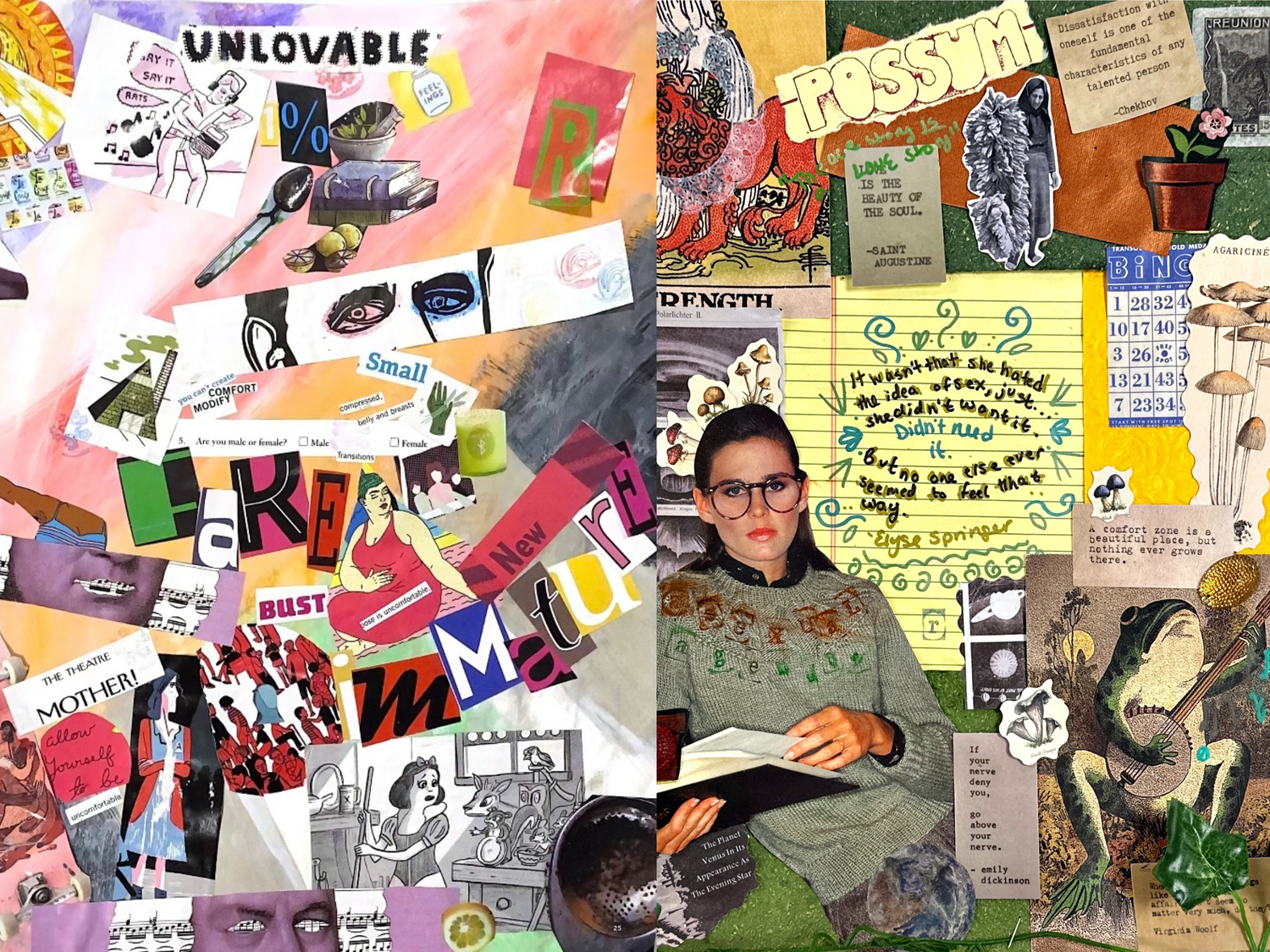
A-spec realities seeking unlearning and relearning
Introduction
Most persons worldwide are conditioned to believe that all humans have sexual and romantic attraction, sexual and romantic desire and sexual arousal. Minimal or no education or awareness about Asexuality and Aromanticism perpetuates the belief that allosexuality or amatonormativity alone are normal. So, people like me who experience minimal or no sexual/romantic attraction, sexual/romantic arousal, sexual/romantic activity or sexual/romantic desire, i.e., asexuals (Aces) and Aromantics (Aros) are often considered abnormal and asexuality is therefore pathologized. Further, some Aces are prescribed hormonal and psychological therapy which is unnecessary, unlawful and unethical. Hence, I share my lived realities about how I learnt that asexuality (my Aceness) and Aromanticism are normal and possible and how educators and many others must understand and accept, remember this to provide us A-specs affirmative and empathetic support when required.
In September 2024, the Ministry of Social Justice and Empowerment (MoSJE), Government of India (GoI), invited input from us LGBTQIA+ persons in India, about our healthcare, livelihood and other requirements. Consequently, I led the effort along with 4 more Aces from and in India to collate and submit a document detailing the various challenges and needs of diverse Aces like us in India. Even before that I have been writing and speaking about my Aceness and want to educate readers about my world of Aceness through my personal narratives, experiences, views, challenges and needs. I prefer using the terms Ace, Aro, Aceness, Aroness and Aspecs and with the capitalised ‘A’, to symbolize assertion and self-affirmation of my Aceness and Aroness. Here I narrate how I understood and accepted my Aceness and Aroness while lacking relevant education, vocabulary and community to provide affirmation. While reflecting on fluidity and subjectivity of my experience, this can be used by the A-spec community for education about us.
Demystifying desire, accepting my Ace-ness and Aro-ness through self-education
Having studied computer science in high school and college in India from 1988-1995, I worked as a software developer, analyst, tester and project manager in the Information Technology industry in India and abroad from 1995-2009. I began accessing the internet at my workplace, primarily for professional reasons, in 1996. I have also been reading, discussing and writing regularly on diverse topics from my childhood on physical and digital platforms. However, none of these habits and privileges helped me gain access to information about gender and sexuality or gender or sexually diverse individuals or communities, in digital or physical spaces until around 2005. Actually, until 2006, I did not know that support groups for gender, sexual and romantic minorities (GSRM or LGBTIQAP+ persons) existed, although I began associating with various socio-political movements, social justice and human rights groups from 1998 onwards.
I have been active in GSRM groups and organisations from 2006. Actually, the public and private discourse was largely limited to LGBT then. But, around 2013, I read and heard about the term asexuality. I could identify almost instantly with it, as I had understood my Aceness in my teenage years or even earlier. That year, I also participated in an informal discussion on asexuality with a few other LGBTQIAP+ persons who may or may not have been Aces. This started convincing me that I could stop doubting and shaming myself about the absence of: sexual attraction or sexual desire or sexual arousal. Until then, I thought that only having sexual and romantic attraction, sexual and romantic desire and sexual arousal are normal and natural to all living beings. Consequently, I compulsively overcame my touch sensitivity and subjected myself to sexual and romantic encounters and episodes, causing me immense trauma, anger and shame, sometimes.
Normalising Aceness and Aroness - my educational efforts
Over the years, I have found that many allosexuals (persons having sexual attraction towards others, sexual desire or sexual arousal) are ignorant about and disinterested in learning about and understanding my Ace-ness and Pan-GrayRo-ness. This is also because of the widely presumed impossibility and abnormality of Aceness and Aroness. I attribute this to the compulsory sexualisation and hypersexualization in society, leisure and entertainment media, education et al. Furthermore, I find that many of us humans are wrongly and unnecessarily conditioned to think that being allosexual alone is natural, thereby reducing the chances of self-acceptance and social inclusion of asexuality and aromanticism. During multiple online and offline awareness sessions and conversations about my Aceness and pan-GrayRoness, I was asked how, why and when I became asexual and pan-GrayRo and have been told that these are fascinating and privileges - which I find appalling and amusing.😈
Through my regular interactions with allosexuals and amatonormatives (who are presumably in majority among humans, worldwide), I have realized that we Aces and Aros are wrongly considered lonely, boring, frustrated, asocial, dysfunctional (physically, emotionally, hormonally or sexually), experiencing low libido, hormonally deficient or mentally ‘disordered’. Many allonormative persons conflate and confuse asexuality with desexualisation, celibacy, prudery, saintliness, asceticism and abstinence. Aditionally, I have heard that asexuality is often mistakenly attributed to bad sexual experiences/encounters or sexual assault.
Actually, many allosexuals I have met are incredulous when they learn that I am a pan-grayromantic Ace having the same domestic partner for over 20 years. This is because sexual and romantic attraction, sexual arousal, sexual activity, sexual and romantic intimacy and sexual and romantic episodes/encounters are often mistakenly considered mandatory for intimate relationships to start and sustain. Additionally, many allosexuals and amatonormatives believe that an Ace or an Aro can have an intimate relationship only with another Ace or Aro and that Aces and Aros are child-free (like me) or do not procreate. If the intimate relationship is not based on sexual or romantic attraction then it is largely presumed to be a Queer Platonic Relationship (QPR). But why should every relationship have labels and definitions? And can’t they evolve, morph or change?
I therefore continue reiterating that asexuality and Aromanticism, which are both spectrums, are not anomalies, abnormalities, defects, diseases or impossibilities and that we Aces and Aros are valid and normal beings. Of course, I have realised that having minimal affirmative terms for Asexuality or Aromanticism in local/regional languages reduces their understanding and acceptance and are among the main challenges for Aces and Aros to seek or find validation or community particularly in socio-culturally and linguistically diverse countries like India. Hence, I believe we must mainstream Aces’ and Aros’ personal narratives, views and experiences and incorporate our needs and aspirations in public policies and laws, especially those concerning healthcare (physical, mental, emotional and sexual), socio-economic survival, equity, sustenance, inclusion and social justice.
In conclusion,
My public and private consultations and conversations with diverse Aces and Aros worldwide, over the last 12 years, my lived experiences, self-education and the MoSJE submission, have informed the recommendations below. I believe and state that it is mandatory for educators, healthcare providers, legal professionals, policy consultants and law and policymakers to ensure the following from an ethics, rights and justice perspective:
No legal or medical decision or recommendation must be made for Aspecs without our input and prior, informed, explicit and documented consent
Advising or subjecting A-specs to any type of corrective or conversion therapy or treatment through persuasion or coercion is unlawful, unethical and unacceptable.
Healthcare and legal professionals must gain education and sensitisation from consenting and compensated intersectional A-specs that asexuality and Aromanticism are valid, normal, natural and possible and that A-specs must be accepted and treated with dignity and empathy.
Healthcare and legal professionals must learn, understand and remember that section 377 if the Indian Penal Code (IPC) which criminalised sexual acts between two consenting adults “against the order of nature”, was read down in September 2018. Although many of us Aces may or not perform any sexual acts, considering asexuality or Aces as unnatural is insensitive, Acephobic and unethical.
Healthcare and legal practitioners must learn, understand and remember that the Supreme Court of India judgement of April 2014 regarding the NALSA vs Union of India (UoI) petitions, mentions asexual as a valid sexual orientation. Although we A-specs do not seek or need legal or medical recognition of our asexuality, considering A-specs and asexuality as invalid is unlawful, unethical and unacceptable.
Educational institutions and professionals involved in queer inclusivity studies/training must recognise and acknowledge the influence of allonormativity in their curriculum
Sex and sexuality education has to move away from binaries and normative understandings that remain reductive and exclusionary towards diverse and intersectional Queer and A-spec realities.
Practitioners and educators of traditional psychotherapy must consider community based peer support as a complementary practice of mental health support for Queer and A-spec communities.
References
Benoit, Y, Santos, R.D. Ace in the UK Report. Stonewall. 2023 https://files.stonewall.org.uk/production/files/ace_in_the_uk_report_2023.pdf
LGBTIQA+ Community: Aces’ Input
Keywords: Asexuality, Aces, Allonormativity, A-spec, Aromantic, sexualization, LGBTQIAP+
Double-click to edit...